The Tale of Junko

An online home for Junko—where where you can purchase the latest copy

From the ashes of disaster to the frozen edges of the world, Junko’s journey becomes a legend of resilience—bridging cultures, rescuing the forgotten, and carrying ancestral memory across oceans, ice, and time.  

Junko Books

Through Junko’s voice, stories rise, carrying memory into tomorrow. Honouring the spoken word, Junko’s journey safeguards the fragile threads of ancestral language. In her telling, courage becomes ceremony, and heritage becomes a path forward.

Book One

LCCN # 2025926416
1767320796

  days

  hours  minutes  seconds

until

Book Launch

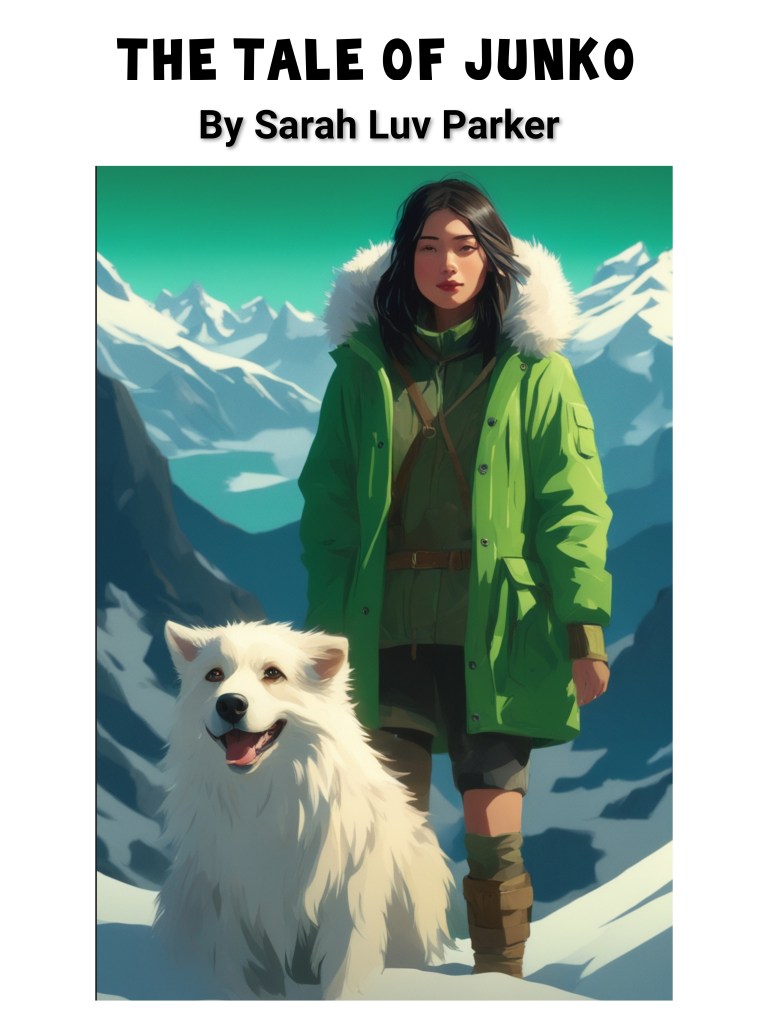
Book One: The Tale of Junko

The Tale of Junko

Beneath the shadow of Mammoth Bluffs, Junko lives with her family in a modest canvas tent perched high in the mountains above Britannia Beach. The daughter of Japanese immigrants descended from Indigenous peoples, she grows up in hardship, gathering firewood each evening as her parents struggle to keep the household alive. When a landslide destroys her home and takes her loved ones, Junko is left bereaved and alone, forced to confront the mountains’ unforgiving silence.

Determined to survive, she embarks on a journey of resilience and self-discovery. Guided by the stories of her ancestors, Junko learns to forge bonds in a community that often overlooks newcomers and their contributions to society. Along the way she encounters figures who shape her path: Mr. Moodie, the stern mine overseer; Phyllis, a spirited companion; Bing, the kindly shopkeeper; and Chief Khatsahlano, whose oral traditions reveal the power of heritage. Even Miner Billie Baillie, curmudgeon and trader, leaves his mark on her unfolding tale.

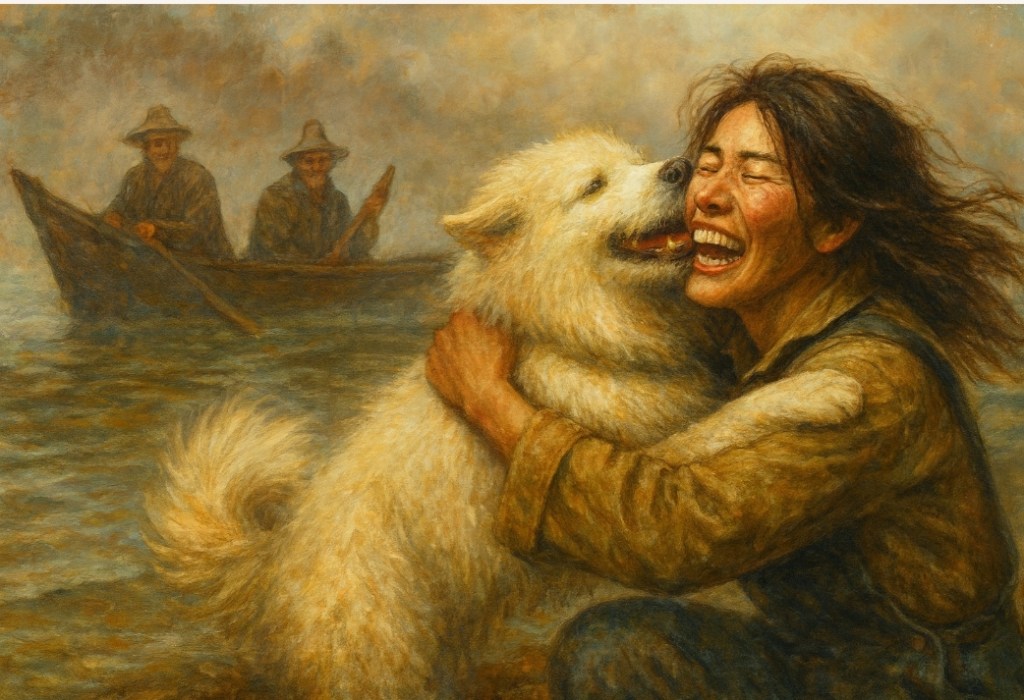
Through trials and friendships, Junko finds strength in her loyal Coast Salish woolly dog, Mutton, and in a mystical encounter with a spirit bear that guides her towards self-acknowledgement. As winter closes in and the community rebuilds in the wake of disaster, Junko seizes an unexpected chance to lead the mule teams at the mine — a turning point that cements her place as a resilient young woman determined to honour her roots.

Tender yet unflinching, The Tale of Junko is a story of survival, cultural identity, and the enduring power of storytelling. Junko’s voice carries the legacy of her forebears into a new world, ensuring their heritage will not be forgotten.

Book Two

In Progress

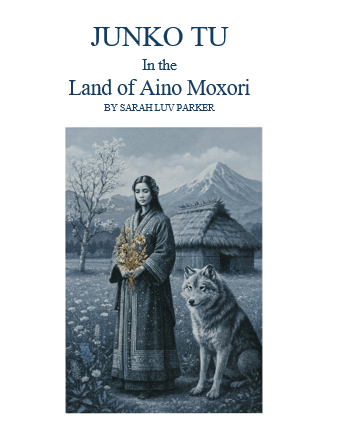
Book Two: Junko TU in the Land of Ainu Moxori  
Amid earthquakes, exile, and spirit animals, Junko discovers her lost culture and becomes a savior across seas and ice.  

After surviving the Great Kanto Quake and mourning the loss of her grandfather, Junko sets out with her loyal grey wolf to seek her scattered relatives in Ainu Moxori. Along the way, she rediscovers her lost culture and gains the gift of communicating with spirit animals. Immersed in the lives of the Ainu, Junko witnesses the harsh realities of forced assimilation into Japanese society. Her journey becomes one of courage and compassion: she rescues Korean families enslaved in Sakhalin’s mines, helps rebuild Kuril Island villages devastated by a tsunami, and faces peril on an ice flow in the Bering Sea. In the gripping finale, Junko undertakes a heroic dog sled run across the frozen wilderness to bring life-saving serum from Nome, Alaska, halting a deadly diphtheria outbreak and preserving the survival of coastal communities.  

Book Three

In Progress

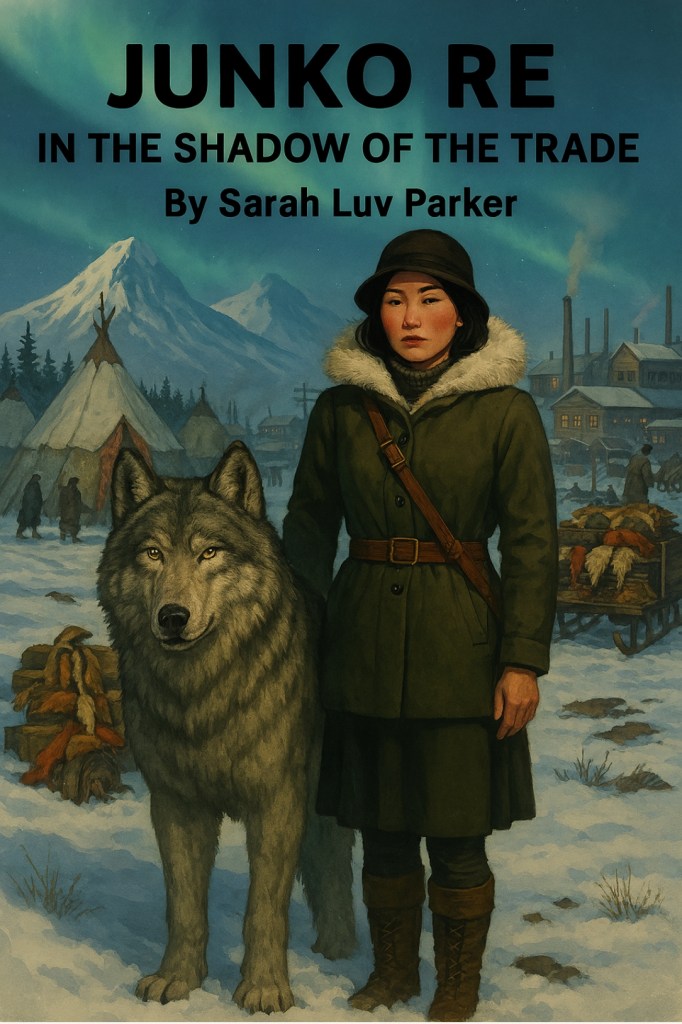
Book Three: – Junko Re in the Shadow of the Trade  
On a perilous voyage through Siberia and Finland, Junko bridges cultures and leads the forgotten to survival.  

In Junko Re in the Shadow of the Trade, Junko embarks on a daring sailing voyage from Nome, Alaska with Cugu and her Sakhalin huskies aboard Olaf Swenson’s vessel. Their mission is to aid the Indigenous peoples of Siberia, who suffer after the Bolsheviks close the fur trade in the wake of the Russian Revolution—an act that devastates the Chukchi communities. Immersing herself in their culture and language, Junko helps reestablish trade and deliver vital supplies to starving villages. Racing against the Arctic freeze, she sails over the top of the continent to Finland, only to find the Red Army beginning its invasion. In a dramatic turn, Junko leads Sami reindeer herders to safety in the remote Ural Mountains. Set against the turbulent years of the late 1920s and early 1930s, this chapter of Junko’s journey blends survival, cultural resilience, and heroic leadership across some of the harshest landscapes on earth.  

← Back

Thank you for your response. ✨

Rating(required)

← Back

Thank you for your response. ✨

Rating(required)

Acknowledgements

I wish to thank the many people who contributed to the writing of this book.

Bradley Nichols, Executive Director and Curator at the Whistler Museum & Archives, for his invaluable assistance with railway research.

Deron Johnston, Director of Museum Site & Assets, & Laura Minta Holland, Curator of Collections & Engagement at the Britannia Mining Museum,for their guidance on mining history.

– Huy chexw a (thank you) to the employees of the Squamish Lil’wat Cultural Centre for their support with history and language.

Chief Janice George, master weaver, whose knowledge of the Salish woolly dog and its cultural significance enriched the depth of this work.

The Paháyikwup Language Commission & Amy Baker, nexwsx̱el̓t ta shewálhs ta sníchim cht Curriculum Developer, for their dedication to language preservation and guidance.

-Avec gratitude à Maila Maria Paradis Hosie, illustratrice franco canadienne, dont l’art a donné souffle et lumière à Junko. Who truly made this work of literature come to life through her art.

Book One Inspired : Echoes of Howe Sound
Legacies Woven in time

Junko – A young Japanese-Indigenous orphan who survives the harsh coastal mountains of Howe Sound, embodying resilience, storytelling, and the preservation of ancestral memory.  

Mutton – The last known Coast Salish Woolly Dog, symbol of a vanishing lineage and the fragile threads of Indigenous heritage.  

Phyllis Munday (1894–1990) – A pioneering explorer who, from founding a Girl Guides company at 16 to scaling peaks with her husband Don, became a legend of the local mountains.  

George Gibbs (1815–1873) – Ethnologist and linguist whose work during the westward expansion helped record and preserve the languages and cultures of the Pacific Northwest.  

Captain John Andrew “Jack” Cates & Crew – Steamship pioneer who developed Bowen Island as a resort; his vessel Ballena sank at Vancouver’s Union Steamship wharf in 1920, claiming the life of deckhand Lawrence Smith and marking a tragic chapter in coastal history.  

Chief August Jack Khatsahlano (1877–1971) – Squamish medicine man and oral historian, whose recordings safeguarded the stories of his people and bridged Indigenous memory with settler history.  

Yip Bing (“Dr. Y.B.”) – A humble worker at Britannia Mining and Smelting, remembered as a community hero for his selfless service during the 1918 flu pandemic.  

Alex and Myrtle Philips – Visionary builders of Rainbow Lodge at Alta Lake, whose fishing retreat grew into one of the largest lodges west of Banff, forever shaping Whistler’s recreational legacy.  

The Pacific Great Eastern Railway (1914) – Its arrival through the valley transformed Howe Sound, fueling industry while opening paths for tourism and storytelling along the Pemberton Trail.

Sarah Luv Parker

Sarah Luv Parker is a writer and advocate whose work blends meticulous historical research with lyrical storytelling. As Organizational Chair of the Esquimalt–Saanich–Sooke EDA and an active voice for disability rights, she brings clarity, dignity, and resilience to both her advocacy and her art.

Her fiction is rooted in respect for Indigenous cultures and oral traditions, weaving Iñupiat, Ainu, and Sḵwx̱wú7mesh (Squamish) names, chants, and symbolism into narratives that honour First Peoples and resist colonial erasure.

She treats writing as ritual—crafting sacred chants, invocations, and motifs that transform grief into renewal and story into legacy.

Sarah’s creative process is marked by technical precision and emotional depth. She experiments with clipped, urgent dialogue to heighten survival stakes, layers environmental realism into her settings, and develops animal characters with subtle individuality. Her stories are not only tales of endurance and connection, but also bridges between worlds.

When she is not immersed in her manuscripts, Sarah continues her work as an advocate for systemic reform in disability programs, striving to ensure justice and dignity for marginalized communities. She lives in Victoria, British Columbia, on the traditional lands and unceded territories of the lək̓ʷəŋən peoples represented by the Songhees and Esquimalt Nations and the W̱SÁNEĆ peoples represented by the Tsartlip, Pauquachin, Tsawout, Tseycum and Malahat Nations, where she writes with resilience, empathy, and an unwavering belief in the transformative power of story.

Contact


thetaleofjunko@gmail.com

← Back

Thank you for your response. ✨